
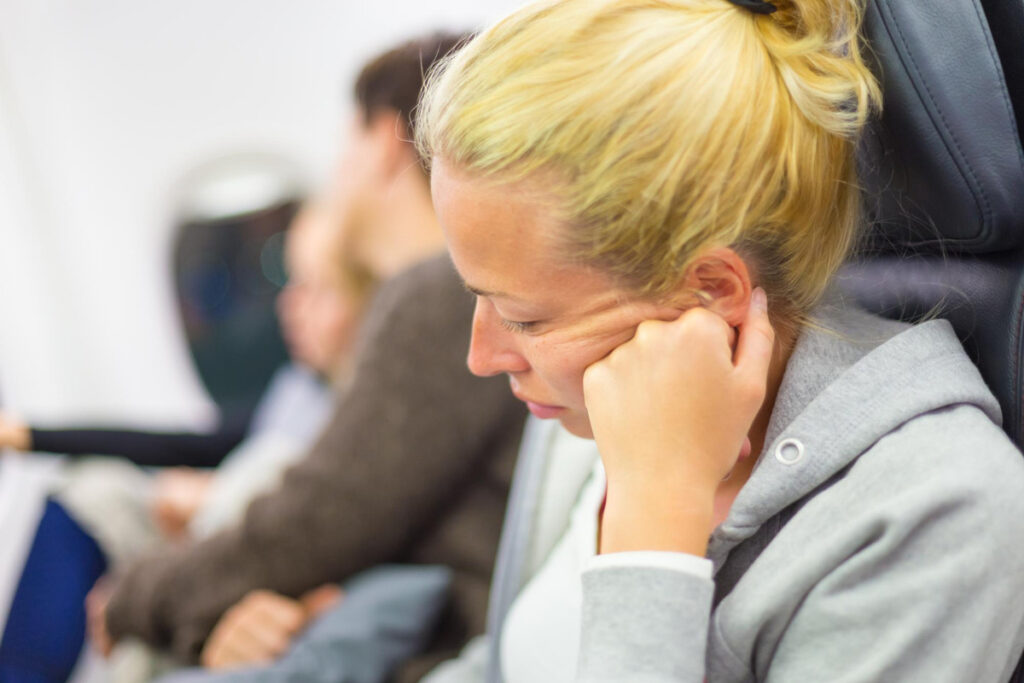
Flying with tinnitus can be a stressful experience, especially for travelers who already struggle with ringing, buzzing, or hissing sounds in their ears.
Airplane cabins expose passengers to pressure fluctuations, constant engine noise, and low humidity, all of which can make tinnitus symptoms more noticeable.
Understanding how air travel affects the ears and taking preventive measures can help reduce discomfort and make flying with tinnitus far more manageable.

Flying with Tinnitus
Flying with tinnitus can cause temporary worsening of symptoms due to changes in air pressure and cabin noise.
During takeoff and landing, rapid variations in altitude lead to fluctuations in middle ear pressure.
This pressure imbalance affects the Eustachian tube, which connects the middle ear to the back of the throat and helps equalize air pressure.
When the tube is unable to open efficiently, pressure builds up behind the eardrum, creating discomfort and sometimes amplifying tinnitus sounds.
Passengers with existing ear sensitivity or sinus congestion are particularly vulnerable to this effect.
Additionally, cabin noise levels typically range between 85 and 100 decibels, which can strain the auditory system and make tinnitus more perceptible.
The combination of stress, fatigue, and environmental noise can heighten the intensity of tinnitus during or after a flight.
Knowing how to minimize these triggers can make the experience much more comfortable.
How Air Pressure Affects Tinnitus
Air pressure changes are one of the biggest challenges for people flying with tinnitus.
The inner ear is extremely sensitive to pressure variations, and the Eustachian tube plays a key role in balancing that pressure.
When air pressure inside the cabin drops rapidly, the body needs time to adjust, but the tube may become temporarily blocked.
This blockage can cause ear fullness, popping, or a feeling of imbalance, which often coincides with louder tinnitus.
Simple techniques such as swallowing, yawning, or chewing gum help open the Eustachian tube and restore pressure balance.
Specialized earplugs, often labeled as flight or pressure-regulating plugs, can slow the rate of pressure change and protect the ears.
Avoid flying with a cold, sinus infection, or allergies, as these conditions can make pressure equalization more difficult.
Staying well-hydrated and using saline nasal sprays before takeoff and landing can further support ear comfort.
These simple steps can make a significant difference in minimizing tinnitus-related discomfort during a flight.
Coping with Cabin Noise and Stress During Flights
Constant exposure to cabin noise can intensify tinnitus perception, even for individuals accustomed to flying.
Aircraft engines produce a continuous low-frequency sound that can mask normal hearing frequencies and make tinnitus more apparent.
Using noise-canceling headphones or high-quality earplugs can significantly reduce exposure and make the flight more tolerable.
Listening to calming music, audiobooks, or white noise can also distract the brain from internal ringing.
Stress is another important factor that influences tinnitus severity.
Many travelers experience anxiety before and during flights, which may tighten neck and jaw muscles, increase heart rate, and elevate tinnitus awareness.
Practicing deep breathing, mindfulness, or gentle meditation before boarding can help maintain relaxation.
Choosing a window seat away from the engines and avoiding excessive caffeine or alcohol also helps keep the nervous system calm.
Every small effort contributes to reducing tinnitus intensity during air travel.
Preventive Tips Before and During the Flight
Preparation is key when flying with tinnitus.
Before the flight, try to rest well and stay hydrated, as fatigue and dehydration can worsen tinnitus.
Pack noise-canceling headphones, earplugs, and any prescribed ear drops or nasal sprays.
If you have allergies or congestion, using a decongestant or antihistamine before the flight may help prevent ear pressure problems.
During the flight, avoid loud movies or music at high volume, as excessive noise can irritate the auditory system.
Stretching your neck and shoulders occasionally helps maintain proper circulation and reduces tension that may aggravate tinnitus.
Try to keep your posture upright to promote better airflow through the Eustachian tubes.
Avoid alcohol and caffeine, which can dehydrate the body and increase sensitivity to noise.
After landing, give your ears time to readjust before using earbuds or headphones again.
Following these precautions can prevent unnecessary strain on your hearing.
When to Seek Medical Advice Before Flying
If you have chronic or severe tinnitus, it’s wise to consult a healthcare provider before traveling.
An audiologist or ENT specialist can examine your ears and recommend personalized strategies to prevent discomfort.
If you experience ear pain, fluid buildup, or dizziness, flying may temporarily worsen these symptoms.
In some cases, doctors may suggest pressure-equalizing earplugs or prescribe nasal sprays to maintain Eustachian tube function.
Never attempt to fly with an untreated ear infection, as it can cause significant pain and hearing complications.
If tinnitus persists or worsens after a flight, seek medical evaluation to rule out barotrauma or middle ear inflammation.
Timely assessment ensures that your auditory system remains healthy and resilient.
Natural Support for Frequent Flyers with Tinnitus
For individuals who fly frequently or experience increased tinnitus after flights, supporting ear and neurological health naturally can be beneficial.
Neuro Quiet is a natural supplement formulated to help manage tinnitus symptoms and promote auditory wellness.
It combines ingredients such as Alpha-GPC, GABA, L-Dopa, Moomiyo, and L-arginine, known for their neuroprotective and anti-inflammatory effects.
By improving circulation, supporting neurotransmitter function, and promoting relaxation, Neuro Quiet may help reduce the perception of ringing in the ears.
Its sublingual spray format allows for quick absorption, making it convenient for travelers.
For those who experience tinnitus flare-ups due to pressure changes or stress, Neuro Quiet can complement other preventive strategies.
Incorporating it into your wellness routine before and after flights may help support calmness and ear comfort.
Fly Comfortably and Protect Your Hearing
Flying with tinnitus doesn’t have to mean enduring discomfort or anxiety.
With the right preparation and ongoing ear care, you can protect your hearing and travel with greater ease.
Neuro Quiet offers a natural way to support auditory and neurological balance, helping reduce tinnitus intensity and promote relaxation.
To know more about this product and how it can support your hearing health, visit this page.